Investments
Crypto
Since 2009, cryptocurrencies have gained significant traction across global financial markets. Their growth has largely been driven by increasing investor interest, technological innovation, and the widespread adoption of digital wallets. As a result, cryptocurrencies are widely recognised as one of the most volatile asset classes available.
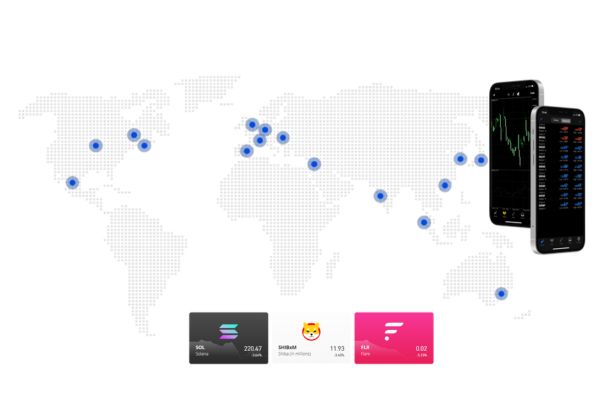
We provide access to leading cryptocurrencies with leverage of up to 1:20, including Bitcoin, Ethereum, Litecoin, Dash, Ripple, Bitcoin Cash, Cardano, Polkadot, Stellar, Chainlink, EOS, with additional assets expected to be added in the near future.
Due to their digital nature, cryptocurrencies are not backed by physical commodities or issued by central banks, although they are commonly priced against traditional currencies such as the US dollar.
We provide access to leading cryptocurrencies with leverage of up to 1:20, including Bitcoin, Ethereum, Litecoin, Dash, Ripple, Bitcoin Cash, Cardano, Polkadot, Stellar, Chainlink, EOS, with additional assets expected to be added in the near future.
Due to their digital nature, cryptocurrencies are not backed by physical commodities or issued by central banks, although they are commonly priced against traditional currencies such as the US dollar.
Forex
Тhe foreign exchange (Forex) market is a decentralised global marketplace in which currencies are traded. It does not operate through a single centralised exchange. Instead, transactions are executed electronically via interbank networks, Electronic Communication Networks (ECNs), and regulated brokerage platforms.
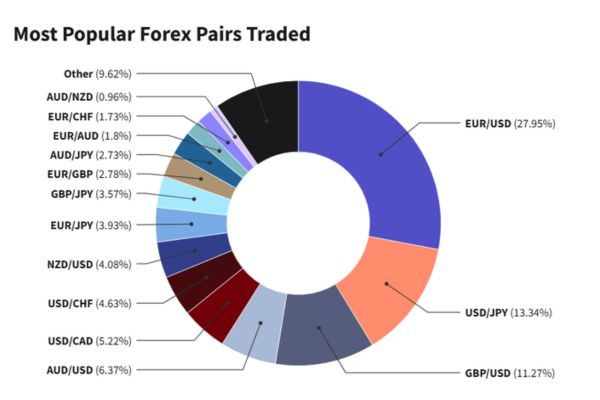
Forex trading is conducted through currency pairs, such as EUR/USD or GBP/JPY. Each pair represents the relative value of one currency against another.
When entering a position in a currency pair, an investor simultaneously buys one currency and sells the other. For example, a long position in EUR/USD involves purchasing euros while selling US dollars.
Forex trading is conducted through currency pairs, such as EUR/USD or GBP/JPY. Each pair represents the relative value of one currency against another.
When entering a position in a currency pair, an investor simultaneously buys one currency and sells the other. For example, a long position in EUR/USD involves purchasing euros while selling US dollars.
Commodities
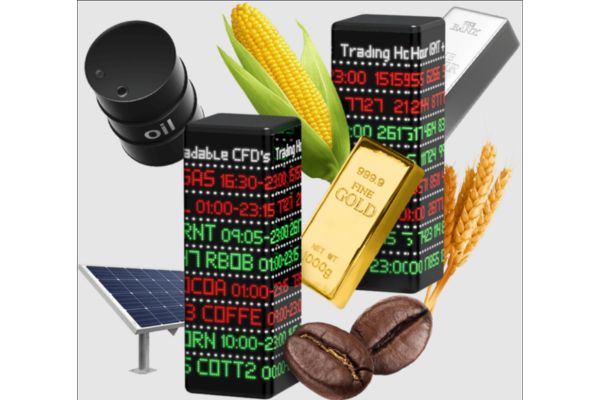
The commodities market primarily involves the trading of raw materials rather than services. It is generally divided into two categories: “soft” commodities and “hard” commodities. Soft commodities typically refer to agricultural products, while hard commodities include natural resources extracted from the earth, such as metals and energy products.
Commodities are commonly traded through futures contracts and related derivative instruments. Their prices are influenced by a range of factors, including global supply and demand, geopolitical developments, trade policies and sanctions, production levels, and weather conditions.
Market participants closely monitor economic data, political events, and environmental factors to assess potential price movements. For example, oil prices may respond to OPEC policy decisions, adverse weather conditions can impact agricultural yields and pricing, and movements in gold often correlate with fluctuations in the US dollar.
Commodities are commonly traded through futures contracts and related derivative instruments. Their prices are influenced by a range of factors, including global supply and demand, geopolitical developments, trade policies and sanctions, production levels, and weather conditions.
Market participants closely monitor economic data, political events, and environmental factors to assess potential price movements. For example, oil prices may respond to OPEC policy decisions, adverse weather conditions can impact agricultural yields and pricing, and movements in gold often correlate with fluctuations in the US dollar.
Stocks
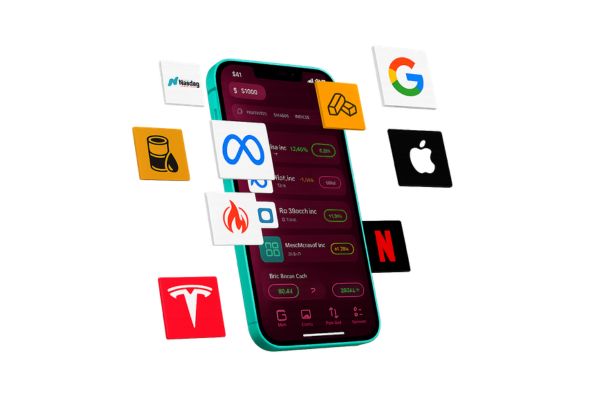
Contracts for Difference (CFDs) on shares reflect the price movements of the underlying company’s stock listed on a regulated exchange. This allows traders to speculate on whether a company’s share price will rise or fall, without owning the underlying asset.
You may place buy (long) or sell (short) positions based on your expectations of price movements in shares of major publicly listed companies.
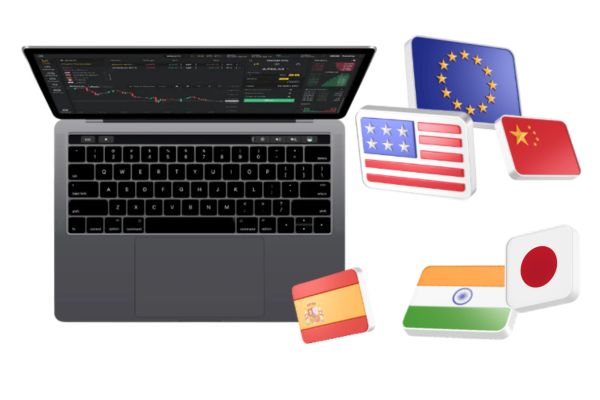
We provide access to a wide selection of widely traded shares sourced from leading global financial markets, including exchanges in the United States, Asia, and Europe. This enables trading opportunities across different time zones, subject to the respective market trading hours.
Share CFDs may be traded with leverage of up to 1:10, depending on regulatory classification and account type. Through our mobile trading platform, you can monitor and manage positions in real time, including during earnings announcements and periods of increased market volatility.
You may place buy (long) or sell (short) positions based on your expectations of price movements in shares of major publicly listed companies.
We provide access to a wide selection of widely traded shares sourced from leading global financial markets, including exchanges in the United States, Asia, and Europe. This enables trading opportunities across different time zones, subject to the respective market trading hours.
Share CFDs may be traded with leverage of up to 1:10, depending on regulatory classification and account type. Through our mobile trading platform, you can monitor and manage positions in real time, including during earnings announcements and periods of increased market volatility.
Indices
A stock index represents a group of shares that can be traded as a single financial instrument. While some market participants prefer to speculate on the price movement of individual securities, others choose to trade stock indices to gain broader market exposure.
Because an index reflects the combined performance of multiple companies, it is often used as an indicator of the overall health of a particular sector, economy, or region.
Stock indices are not limited solely to geographically grouped shares. Many indices are structured to track specific industries or market segments. For example, the US Tech 100 Index reflects the performance of companies listed on the Nasdaq exchange, with a strong concentration in the technology sector. As such, it is commonly viewed as a benchmark for the performance of the US technology industry.
Because an index reflects the combined performance of multiple companies, it is often used as an indicator of the overall health of a particular sector, economy, or region.
Stock indices are not limited solely to geographically grouped shares. Many indices are structured to track specific industries or market segments. For example, the US Tech 100 Index reflects the performance of companies listed on the Nasdaq exchange, with a strong concentration in the technology sector. As such, it is commonly viewed as a benchmark for the performance of the US technology industry.